Educate
Rigorous, accessible Spanish-language content on AI capabilities and risks, built on an audience that already exists: the largest Spanish-language AI safety media presence for general audiences.
La inteligencia artificial avanzada nos va a afectar a todos. Una de las comunidades más grandes de Estados Unidos quedó fuera de la conversación.
HASI is a fieldbuilding initiative working to inform, organize, and represent the U.S. Hispanic community in decisions about advanced artificial intelligence.
Frontier AI systems are advancing faster than public understanding of them, and the decisions that will shape how this technology is governed are being made now, in Washington. Yet almost all information about AI safety exists only in English, and AI models themselves are documented to behave less safely in Spanish and other non-English languages[5]. The result is a community of tens of millions with enormous civic weight and almost no seat at the table. HASI exists to change that.
Rigorous, accessible Spanish-language content on AI capabilities and risks, built on an audience that already exists: the largest Spanish-language AI safety media presence for general audiences.
Fieldbuilding across U.S. Latino civic, faith, labor, and professional organizations, creating durable coalitions that understand what is at stake in AI policy.
An audience. @eltechbro is the leading Spanish-language AI safety account for general audiences, with an average of 800,000 monthly views.
Institutional grounding. Founded from within the AI safety field: the founder works in communications at MIRI, the Machine Intelligence Research Institute.
Funded content. A Future of Life Institute grant supports an ongoing Spanish-language AI safety video series.
Research. The founder is a fellow in the MARS research program at the Cambridge AI Safety Hub, working on AI governance and verification.
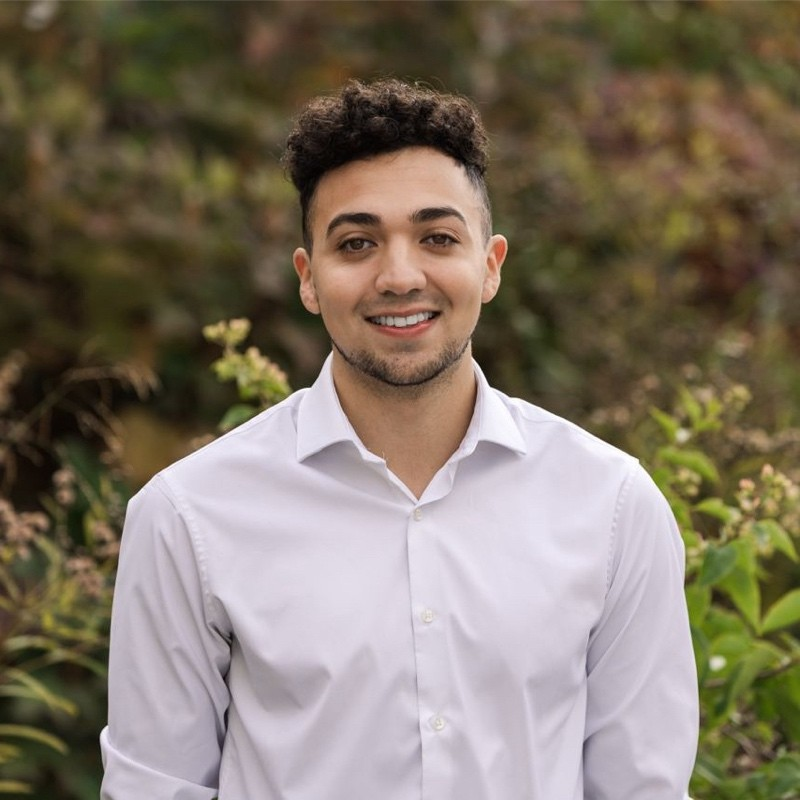
Founder
Tobias Martin works in AI safety communications at the Machine Intelligence Research Institute (MIRI). He holds an M.Ed from Harvard University and a B.S. from Minerva University with a focus in political and cognitive science. He is the creator of @eltechbro, the largest Spanish-language AI safety channel for general audiences, holds a Future of Life Institute grant for a Spanish-language AI safety video series, and is a fellow in the MARS V program at the Cambridge AI Safety Hub. Prior to his current work at MIRI, he spent several years working on education policy in Washington DC.
Si esta brecha también les preocupa, hablemos.
HASI is actively seeking advisors, partner organizations, and funders. If you work in AI safety, philanthropy, policy, or Latino civic life, I would like to hear from you.